
To POA or Not to POA in Real Estate
For much of my life, I’ve pondered many questions. What’s happening outside when I go to sleep? Why is there sometimes nothing rather than a plate of French Fries? If I were to cease to exist on social media, would anyone know who I am? Is the most-watched Netflix series actually just the greatest snoozer 😴?
When it comes to Powers of Attorney in your real estate transactions, we have questions, mainly about the POA’s purpose and whether it’s the correct form and application.
As always, I’m not here to provide legal advice, but simply to let you know what title companies are asking for to keep things simple.
Purpose
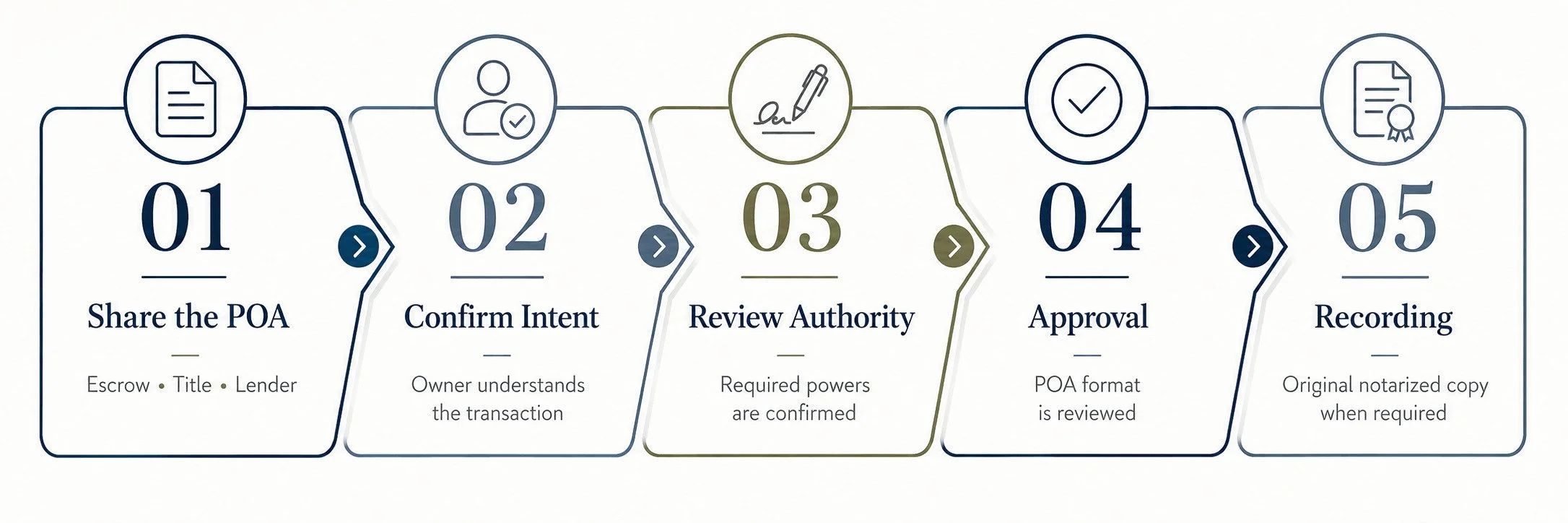
If you have a transaction where a seller or borrower is using a POA, it's best to share a copy of the POA with your escrow, title and lender (for buyer/borrower) to be sure everyone is onboard and approves. It’s best to be sure the owner is aware of and has clearly communicated their intentions. Usually, a POA is used because the owner of a property is going to have difficulty being available to sign documents within the timeline of escrow or they may have a medical-related situation.
Process
The type of POA isn’t always important but mainly it should extend the specific powers to do what type of transaction we are in. The most common type of POA in real estate is a Special Power of Attorney. Special, because it was specifically prepared for one use. The Special POA is typically only good for about 1 year and is only used for someone who is mentally capable of making decisions and can communicate their intention to sell/mortgage a property.
Types
Other common types may be a General or Durable POA. These should be drafted by an attorney, and they typically have clear instructions for the intended use and powers given to the attorney-in-fact. General or Durable POAs may have a longer effective period, so they are usually used for someone with extraordinary circumstances. If this means mental incapacity, typically 2 doctors' notes are requested to confirm the
Prepared for a specific use or transaction.
May provide wider powers depending on how it is drafted.
May remain effective in situations involving extraordinary circumstances.
Entities
If the owner of the property is a trust, the trust agreement must provide instructions for the use of a POA, though 9 times out of 10, when someone mentions using a POA with a trust, we end up working with a successor trustee rather 😊. If your seller is an LLC or Corporation, be ready to provide all entity documents for review to be sure what is allowed.
Support
At the end of the day, we would prefer the owner to be the one signing everything, but we can accept a POA when executed correctly and in the proper format. Be sure to submit copies of everything I mentioned for review as soon as possible and be ready to provide an original notarized copy for recording purposes with our transaction.
For this topic, you may have questions that I didn’t cover. Reach out with any title situation like this and my team, and I will help provide clarity for your upcoming transaction.
